Is 72 a Good Temperature for Heat in the Winter? The Comfort, Cost and Health Verdict
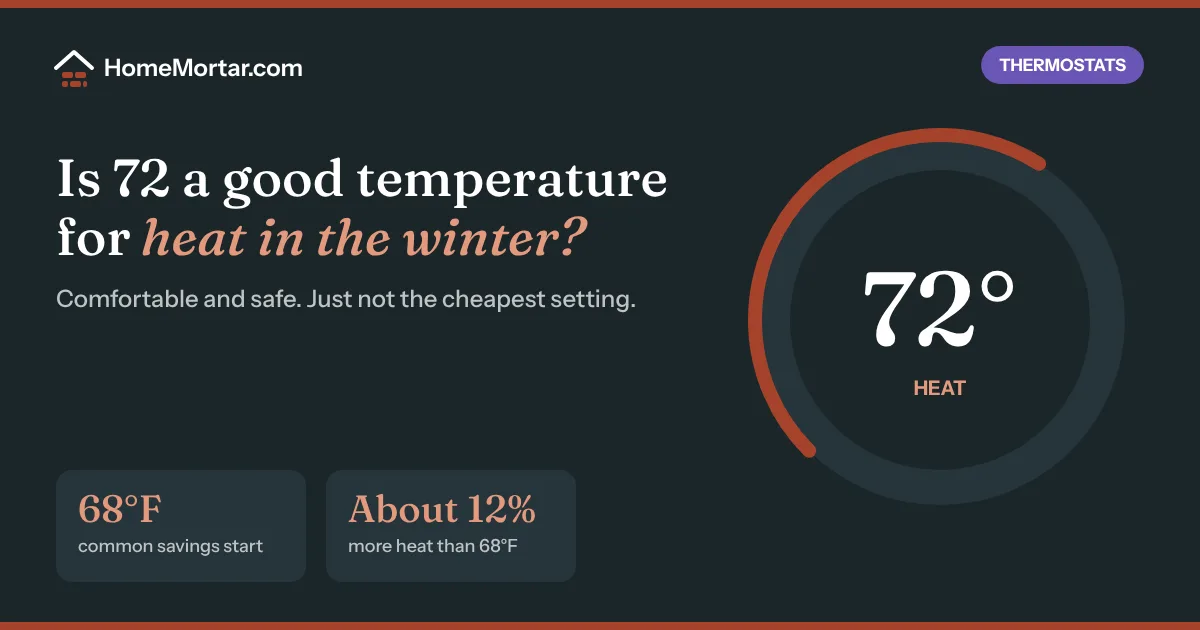
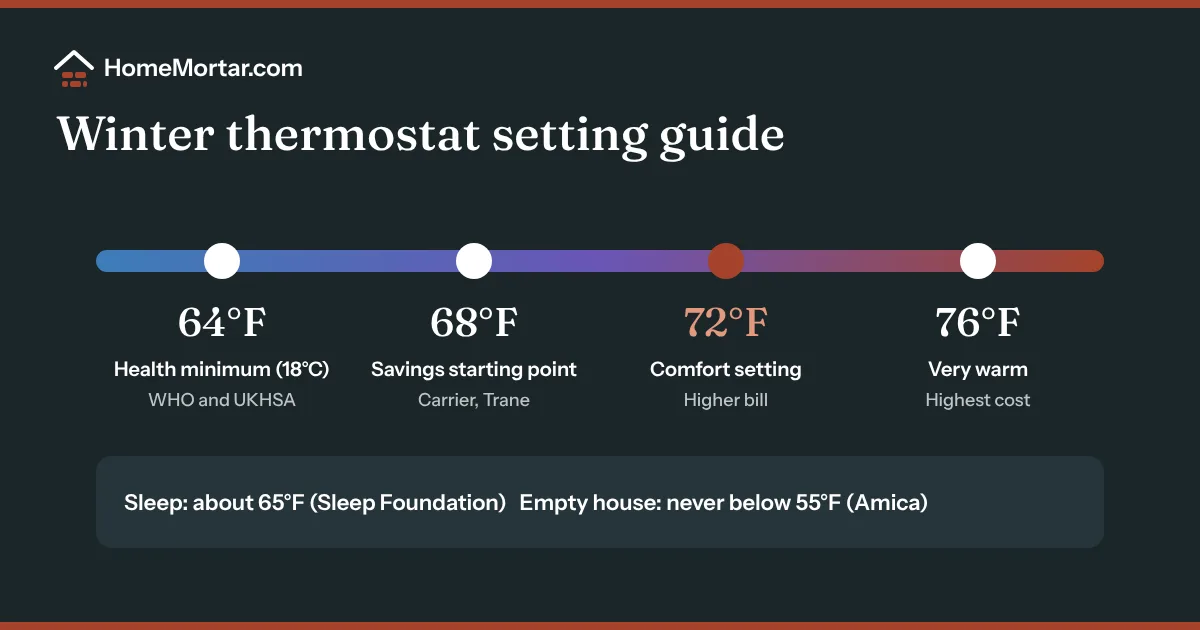
Yes. A setting of 72°F (about 22°C) is comfortable for most people and sits well above every health guideline. It just isn’t the cheapest choice. HVAC makers such as Carrier and Trane suggest starting at 68°F, and in a moderate climate, holding 72 instead uses roughly 12% more heating energy.
So, is 72 a good temperature for heat in the winter? For comfort and health, yes. For the bill, 68 to 70 is kinder. Below are the numbers behind that, who should keep 72, and why 72 can still feel cold.
Where 72 Sits Next to the Official Advice
Health agencies set a floor. Energy agencies and HVAC brands suggest a thrifty target. Seventy-two sits above both.
| Source | What it says |
|---|---|
| World Health Organization (2018 Housing and Health Guidelines) | 18°C (64.4°F) is a safe indoor temperature in cold seasons; vulnerable groups may need more |
| Carrier | Start at 68°F (20°C) while you’re home and awake |
| Trane | 68°F when home, about 10°F lower at night or when away |
| U.S. Department of Energy (Energy Saver Guide, 2022) | Turning the thermostat down 7 to 10°F for 8 hours a day can save as much as 10% a year |
| Sleep Foundation (updated July 2025) | About 65°F (18.3°C) is best for sleep |
No U.S. agency calls 72 wrong. It’s a comfort setting, not a savings setting.
What 72 Costs Compared With 68 or 70
Your heating system replaces the heat the house loses outdoors, and the loss grows with the gap between inside and outside. A simple way to estimate the extra cost is to compare those gaps. At 35°F outside, 72 indoors is a 37-degree gap, and 68 is a 33-degree gap. That’s about 12% more heat.
| Average outdoor temperature | 72°F vs 68°F | 70°F vs 68°F | 72°F vs 70°F |
|---|---|---|---|
| 45°F (mild winter) | About 17% more | About 9% more | About 8% more |
| 35°F (moderate winter) | About 12% more | About 6% more | About 6% more |
| 25°F (cold winter) | About 9% more | About 5% more | About 4% more |
The estimate ignores sun, cooking, and body heat, which would push the percentages higher. Mild climates feel it most because four degrees is a bigger share of a small gap. In dollars, a home that spends $150 a month to heat at 68°F in a 35°F climate would pay about $18 more a month at 72, or about $90 over a five-month season. Insulation and air sealing shrink that gap at any setting.

Who Should Keep 72
Is 72 a good temperature for heat in the winter in your house? That depends on who’s home.
- Older adults. The WHO notes that vulnerable groups may need more than the 18°C minimum. A range of 70 to 72°F in the main living area is a sensible comfort setting for an older parent.
- Someone ill or recovering. The same reasoning applies; comfort matters more than a few dollars.
- People who work from home. Sitting still for hours makes most people feel colder. Heating just the office to 72, if your system allows it, costs less than heating the whole house.
- Heat pump homes. A steady 72 can cost less than big swings. The Department of Energy warns against setbacks that bring on a heat pump’s electric backup heat during recovery. Our guide to EM heat on a thermostat explains why that backup is expensive.
A baby is the exception at night. The Sleep Foundation suggests a nursery can be 1 to 2 degrees warmer than an adult bedroom, up to about 69°F, and warns that an overly warm room may raise the risk of sudden infant death syndrome. During the day, 72 is fine.
Recommended Thermostat Settings for Summer and Winter
People often search “what temperature to set thermostat in winter,” and the short answer is 68°F when you’re home and awake, lower at night. Most of them also want the summer number, so here they are together.
| Situation | Winter (heating) | Summer (cooling) |
|---|---|---|
| Home and awake | 68°F to start; up to 72°F for comfort | 78°F to start (Carrier) |
| Asleep | About 65°F for most adults | As warm as you sleep well |
| Away for the day | 7 to 10°F lower | 7 to 10°F higher |
| Away for days | No lower than 55°F to protect pipes | Higher, but protect pets and plants |
| Heat pump home | Steady, small setbacks only | Steady, small setups only |
The 55°F floor for an empty house comes from the insurer Amica. Turning the heat off while you travel risks frozen pipes, which cost far more than the heat you’d save.
A winter thermostat setting schedule that keeps 72 where it counts
For a furnace home that empties out on weekdays, this keeps 72 when people are home and awake:
| Time | Setting |
|---|---|
| 6:00 a.m. | 70 to 72°F |
| 8:00 a.m. (everyone leaves) | 62 to 64°F |
| 4:30 p.m. (heat starts before you’re back) | 70 to 72°F |
| 10:00 p.m. | 64 to 66°F |
With a heat pump, narrow those swings to 2 to 4 degrees, or hold one setting.
Why 72 Can Still Feel Cold
The thermostat reads the air in one spot. Your body feels a lot more than that.
Dry air pulls heat from your skin. The EPA recommends indoor humidity between 30% and 50%, and staying in that range makes the same temperature feel warmer. Cold windows and walls draw heat from your body even when the air is warm. Drafts at your ankles can make 72 feel like the mid-60s.
A thermostat on a sunny wall or near a supply vent reads warm, so the rest of the house runs cooler; Trane suggests an interior wall near the middle of the home.
Fix those before you touch the dial: seal drafts around doors and windows, close curtains at night, run ceiling fans in reverse on low, and put rugs on cold floors. A yearly heating check also helps, and our guide to furnace tune-up costs covers what that visit should include.
The Best Temperature for Heat in Winter, Room by Room
If you have zones, room sensors, or mini splits, every room doesn’t need 72.
| Room | Practical target |
|---|---|
| Living room, home office | 68 to 72°F |
| Adult bedroom at night | About 65°F |
| Nursery at night | Up to about 69°F |
| Unused rooms | Lower, but not below 55°F |
Mini splits pause heating briefly to defrost in cold weather, which can feel like a cool spell; our guide to what DF means on a mini split explains it.
One myth to drop: setting the thermostat to 80 doesn’t heat the house faster. Most systems deliver heat at the same rate regardless of the setpoint, so you only overshoot.
Frequently Asked Questions
What temperature should I set the thermostat in winter at night?
About 65°F for most adults, based on Sleep Foundation guidance. With a heat pump, keep the drop small so backup heat stays off.
Is 70 a good temperature for heat in the winter?
Yes. It’s a common middle ground: warmer than the 68°F savings starting point and cheaper than 72.
Is 72 a good temperature for heat in the winter with a heat pump?
Yes, if the heat pump holds it without the backup heat running for long stretches. A steady 72 can cost less than deep setbacks that switch on electric strips during recovery.
What is 72°F in Celsius?
About 22°C. Western Australia’s energy agency, for example, suggests 18 to 20°C, so 22°C is a comfort choice above that.
What’s the lowest safe temperature for an empty house?
No lower than 55°F, according to Amica, to help prevent frozen pipes. For rooms people live in, the WHO’s floor is 18°C (64.4°F).
For the health reasoning behind indoor minimums, see the WHO’s Housing and Health Guidelines. More settings help is in our thermostat guides.