What Does DF Mean on a Mini Split? Defrost Mode, Minute by Minute
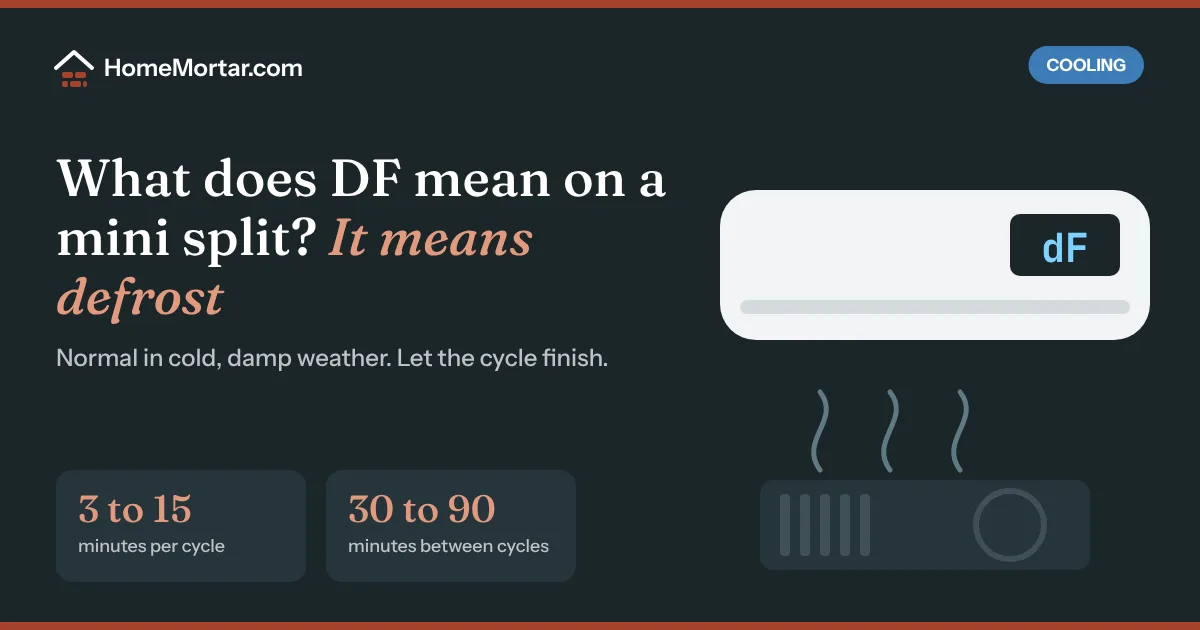
DF means defrost. Your mini split is melting frost off its outdoor coil so it can keep heating. It’s normal and automatic, and the best thing you can do is leave the unit on and let it finish. Heat usually comes back within a few minutes.
If you searched what does DF mean on a mini split because the heat just stopped, that’s the whole answer for most people. The rest of this page covers each brand’s display, normal cycle times, and the few patterns that need a technician.
Why It Happens
In heat mode, a mini split pulls heat out of the outdoor air, so the outdoor coil runs colder than the air around it. When that air is near freezing and damp, moisture freezes on the coil, the same way frost forms on a cold can. A thick layer blocks airflow, so the controls reverse the system for a few minutes to melt it.
Damp weather in the high 20s and low 30s Fahrenheit is classic defrost weather, more than the coldest, driest nights. Filterbuy and Airspool both point this out in their defrost guides.
What you’ll notice during a cycle:
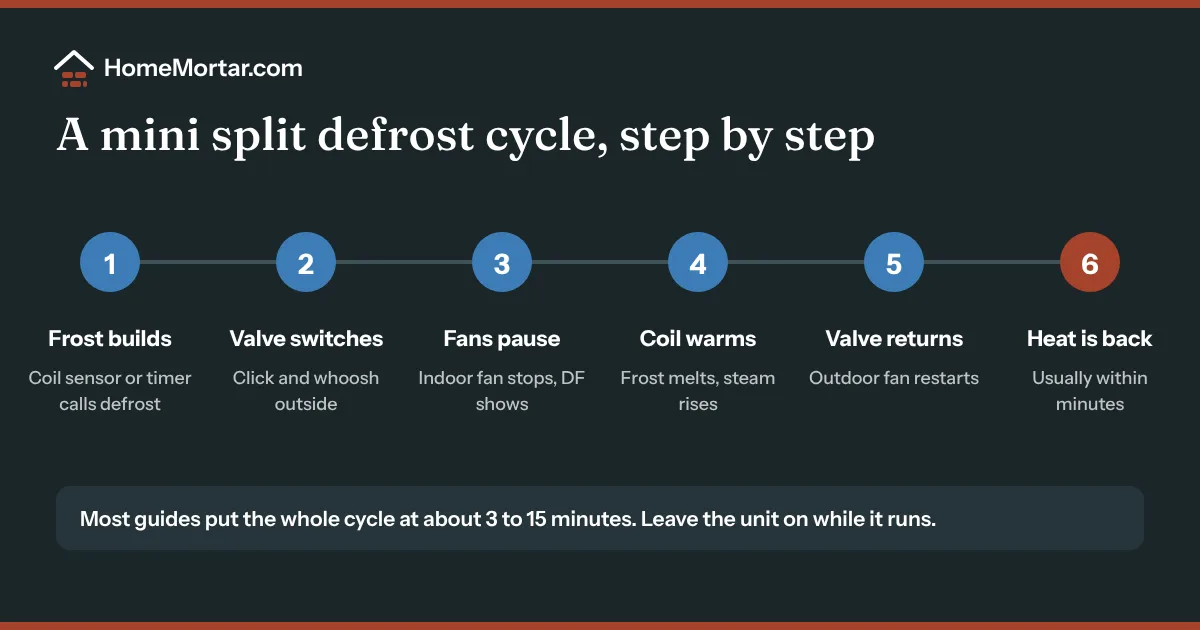
- The indoor fan slows or stops, so the room doesn’t get a blast of cold air.
- A click and a whoosh outside as the reversing valve switches, and again when it switches back.
- Steam rising from the outdoor unit. That’s water vapor from melting frost, not smoke.
- Water dripping under the unit.
How Each Brand Shows It
| Brand | Display | What the brand says |
|---|---|---|
| MRCOOL | DF | Its support page says the code means the system is in defrost mode |
| Pioneer | dF | Its help center calls it “normal operation, not an error code” |
| Senville | dF | Its error code guide lists dF under normal messages, with no action needed |
| Airspool | dF, H1, or HS | Its guide explains all three as defrost on different displays |
| LG | Varies by model | Its support page says steam or dripping water during defrosting is normal |
The mini split DF code reads the same way on all of them. If your brand isn’t listed, check the code list in your owner’s manual.
The Mr Cool DF code
MRCOOL’s DIY units are common in owner-installed homes, so the Mr Cool DF code gets searched a lot. MRCOOL’s support center says the unit defrosts as often as it needs to. Humidity, snow or rain on the outdoor unit, and wind chill can all make it happen more often. For frequent DF, it suggests clearing snow and blockages, adding a cover or shield against wind and snow, and lowering the thermostat setting a little.
How Long Should DF Last?
Brands rarely publish exact numbers because defrost depends on the weather and the model. Published guides land close together:
| Source | Typical length | Typical spacing |
|---|---|---|
| Appliance Parts Pros | 5 to 10 minutes | Every 60 to 90 minutes in cold weather |
| Filterbuy (technician-reviewed) | 3 to 15 minutes | Every 30 to 90 minutes in cold, damp weather |
| HeatAndCool | 5 to 30 minutes | Every 30 to 90 minutes |
| Monkey Wrench (HVAC contractor) | A few minutes | Concern if several times an hour or over 15 to 20 minutes |
A good working rule: most cycles last about 5 to 10 minutes, end in under 15, and come at least 30 minutes apart. These are guide figures, not factory specs, so your manual has the final word.
DF on Mini Split Units: Normal or a Problem?
| What you notice | What it means |
|---|---|
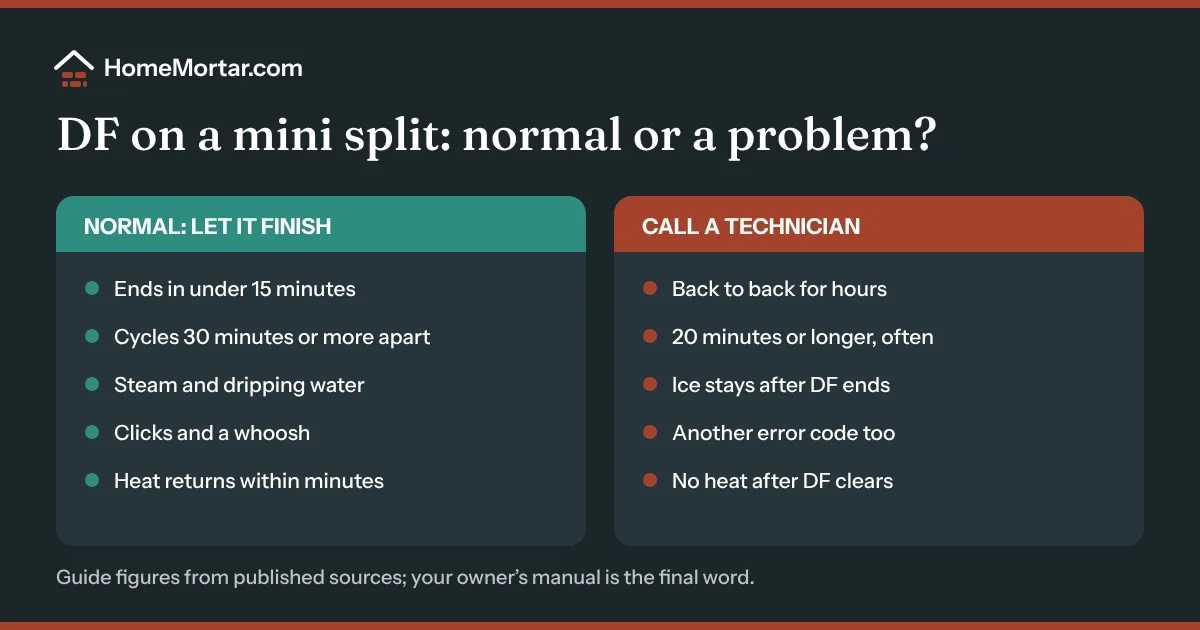
| DF for a few minutes, then heat returns | Normal defrost |
| More DF in fog, drizzle, or wet snow | Normal; damp air near freezing frosts fastest |
| DF more than 2 or 3 times an hour, for hours, in dry weather | Worth a check: sensor, airflow, charge, or controls |
| Cycles that often run 20 minutes or longer | The coil may not be clearing |
| Solid ice left on the coil after DF ends | Defrost isn’t working properly |
| DF together with another error code | A fault the manual should explain |
| No heat even after DF clears | Service needed |
When DF shows up, leave the unit on. Switching it off or changing modes doesn’t speed things up and can restart the process later. Wait 10 to 15 minutes, then glance at the outdoor unit if it’s safe. Steam and dripping are fine; a coil still white with ice is not.
Never chip ice off the coil or pour hot water on it. The fins and tubing bend and puncture easily, and a puncture means a refrigerant leak. Refrigerant work in the U.S. requires a technician with EPA Section 608 certification.
Why a Mini Split Keeps Going Into DF
Weather is the most common reason, but the installation matters too.
- The unit sits too low. Snow and meltwater build up around it. New York’s Clean Heat program checklist calls for risers, stands, or wall mounts of 6, 12, or 18 inches, depending on the location.
- Water drips onto it from the roof. The same checklist suggests keeping units out of the drip line or adding a snow shield that still lets air through.
- Meltwater can’t drain. It refreezes under the unit and can reach the coil. Gravel or a drained base helps.
- Airflow is blocked. Bushes, fences, or a cover wrapped around the unit make frost worse. A raised stand or an open shield is better than a cover.
- Equipment faults. A bad coil sensor, the wrong refrigerant charge, a failing reversing valve, or control-board firmware can all cause extra cycles. On a Green Building Advisor thread about one Mitsubishi multi-zone system, several owners said a board replacement or firmware update fixed it.
Dirty indoor filters cut airflow too, so clean them as the manual directs.
What Defrost Costs You
A 2024 ACEEE Summer Study paper on cold-climate heat pumps cites earlier research on this. In worst-case conditions, reverse-cycle defrost cut heating capacity by up to 29% and efficiency by up to 17.4%. Typical cycles cost far less, but that’s why the room can cool a little and the unit works harder for a few minutes afterward.
Ducted heat pumps often turn on backup electric heat during defrost to hide the cool air. Most ductless mini splits don’t have backup strips, so they just pause the indoor fan. So in practice, the answer to what does DF mean on a mini split is simple: a short, planned break in heat. If you also have a ducted heat pump, our guide to what EM heat on a thermostat means explains that backup.
When to Call a Technician
Call a licensed HVAC technician if you see any of these:
- DF more than two or three times an hour, for hours, in dry weather
- Cycles that keep running 20 minutes or longer
- Ice that stays on the coil or builds day after day
- Another error code alongside DF
- The outdoor fan grinding against ice
Before the visit, note the outdoor temperature, how long DF lasts, and how often it appears. A photo of the coil right after a cycle helps too. A yearly check is cheap insurance; our guide to furnace tune-up costs shows what a heating visit should include.
Frequently Asked Questions
Is the DF code on mini split units an error?
No. It means defrost, a normal automatic cycle. It only signals a problem if it lasts very long, repeats constantly, or appears with another code.
Should I turn off my mini split when it shows DF?
No. Turning it off doesn’t speed up defrost and can interrupt the cycle.
Why does my mini split defrost when there’s no ice?
Some controls defrost on a timer plus a temperature reading, so a cycle can start before you see frost. If it happens constantly in dry weather, a sensor or control problem is possible.
Is the smoke from my outdoor unit dangerous?
White vapor that fades quickly is steam from melting frost. Dark smoke, a burning smell, or flames are not normal; turn off the power at the breaker if it’s safe and call for help.
Still choosing a system? Read the disadvantages of mini split systems, or compare a heat pump vs mini split. You can also see whether a ducted mini split fits better, or size rooms with our mini split sizing calculator. The ACEEE study of cold-climate heat pumps in the field goes deeper on defrost.